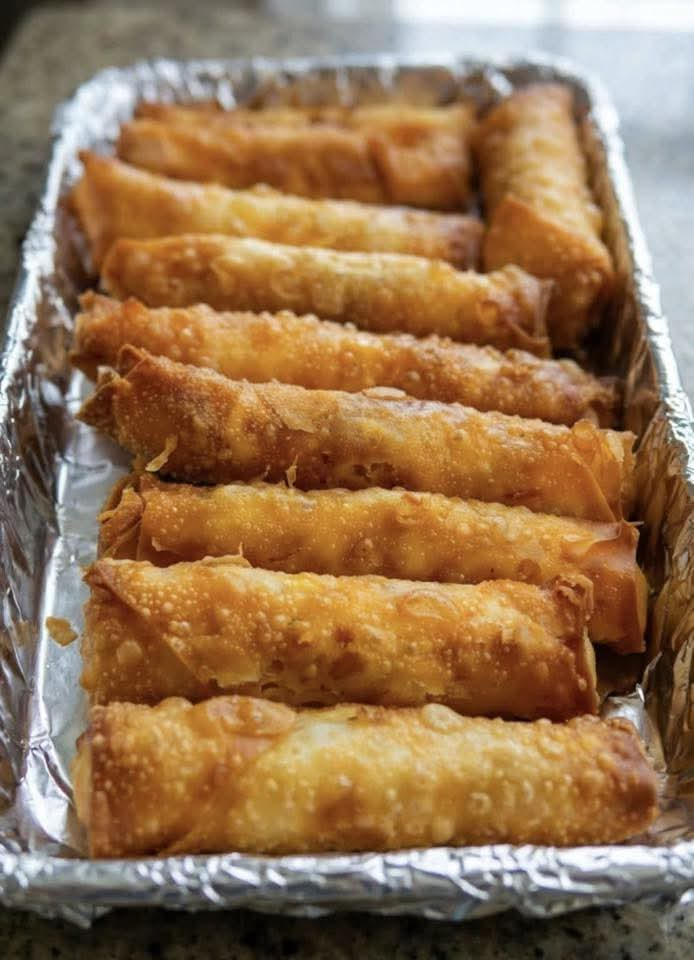
Crispy Homemade Chicken Egg Rolls: Golden, Savory & Ready to Share
There is a specific kind of quiet that falls over a kitchen when a platter of freshly fried egg rolls hits the table. Conversation pauses. Hands reach. Someone burns their fingers and does not care. It is the same reaction whether you are hosting a Super Bowl party, pulling together a Friday night dinner, or simply trying to convince your family that homemade takeout is better than delivery.
These Crispy Homemade Chicken Egg Rolls earn that reaction honestly. They are golden and shatteringly crisp on the outside, packed with seasoned ground chicken, cabbage, carrots, garlic, and ginger on the inside, and they freeze beautifully — which makes them one of the smartest freezer-friendly meals you can keep on hand. They also happen to be one of the best easy appetizer recipes for a crowd, because you can assemble a batch in the afternoon and fry them in minutes just before guests arrive. And if you are building a family-friendly meal plan or a simple meal prep routine, this is the kind of recipe that does double duty: party food on Saturday, dinner on Tuesday, lunchbox filler on Thursday.
Best of all, this recipe gives you three cooking paths — deep fried, air fried, or oven baked — so you can match the method to your equipment, your schedule, and how much crunch you are chasing.
Recipe at a Glance
| Detail | Time / Amount |
|---|---|
| Prep Time | 25 minutes |
| Cook Time (filling) | 8–10 minutes |
| Cook Time (frying) | 3–5 minutes per batch |
| Cooling Time (filling) | 15–20 minutes |
| Total Time | About 1 hour |
| Yield | 12–14 egg rolls |
| Frying Temperature | 350°F (175°C) |
| Air Fryer Temperature | 375°F (190°C) for 10–12 minutes |
| Oven Temperature | 425°F (220°C) for 18–22 minutes |
Ingredients
For the Filling
- 1 pound ground chicken or finely chopped cooked chicken
- 2 cups finely shredded green cabbage
- 1 cup shredded carrots
- 3 green onions, sliced
- 3 garlic cloves, minced
- 1 teaspoon fresh ginger, grated
- 2 tablespoons soy sauce
- 1 tablespoon oyster sauce
- 1 teaspoon sesame oil
- ½ teaspoon black pepper
- ¼ teaspoon red pepper flakes, optional
For Assembly
- 12–14 egg roll wrappers
- 2 tablespoons water, for sealing
For Frying
- Vegetable or canola oil
For Serving
- Sweet chili sauce
- Soy sauce
- Duck sauce
- Hot mustard
Why These Egg Rolls Belong in Your Regular Rotation
Homemade egg rolls have a reputation for being fussy, and that reputation is mostly unfair. The technique is simple: cook a filling, let it cool, roll, and fry. What makes these particular egg rolls worth the effort is the filling itself. Ground chicken keeps the cost down and the protein high, while cabbage and carrots stretch the mixture without diluting the flavor. The result is a roll that tastes substantial but does not feel heavy — the kind of thing you can serve as a party appetizer with dipping sauces or plate as a main course with fried rice and steamed vegetables.
The economics are also worth mentioning. Egg roll wrappers are inexpensive, ground chicken is one of the more budget-friendly proteins at the butcher counter, and cabbage is one of the cheapest vegetables in the produce aisle. A batch of fourteen egg rolls costs a fraction of what the same quantity would cost from a takeout counter, and you control the sodium, the oil, and the fillings. If you are working on budget-friendly dinners without giving up flavor, this is a strong card to play.
And then there is the freezer factor. Assembled, uncooked egg rolls freeze beautifully, which means you can make a double batch on a Sunday and pull out exactly as many as you need on a Wednesday night. That is the definition of a meal prep win — not a sad container of chicken and rice, but something that crisps up in a skillet or an air fryer and tastes like it was made that day.
How to Make the Chicken Filling
Heat a large skillet over medium-high heat. Add the ground chicken and cook, breaking it into small pieces with a wooden spoon or spatula, until it is no longer pink. You want small, even crumbles rather than large chunks, because the filling needs to fit comfortably inside a wrapper without tearing it.
Once the chicken is cooked through, add the minced garlic and grated ginger. Cook for about 30 seconds, just until fragrant. Garlic and ginger burn quickly at this temperature, so keep them moving in the pan and do not walk away.
Add the shredded cabbage and carrots and cook for 3 to 4 minutes, just until the vegetables begin to soften. You are not trying to cook them fully — a little texture is what keeps the filling from turning to mush. Overcooked cabbage releases water, and water is the enemy of a crisp egg roll.
Season the filling with soy sauce, oyster sauce, sesame oil, black pepper, and the optional red pepper flakes. Stir everything together and cook for another 1 to 2 minutes, until the liquid has mostly absorbed. Remove the skillet from the heat and stir in the sliced green onions.
Now let the filling cool completely. This step is not optional. Hot filling softens the wrappers, makes them tear, and turns a simple rolling job into a frustrating one. Spread the filling on a plate or a sheet pan to speed up the cooling — 15 to 20 minutes is usually enough, and you can start organizing your rolling station while you wait.
How to Roll the Egg Rolls
Set up a clean work surface with the wrappers, a small bowl of water, and the cooled filling. Keep the wrappers covered with a clean, damp towel while you work, because they dry out quickly and a dry wrapper cracks when you roll it.
- Place one wrapper on the surface with one corner pointing toward you, like a diamond.
- Spoon about 2 to 3 tablespoons of filling near the lower center of the wrapper. Do not overfill — a modest amount rolls more cleanly and fries more evenly.
- Fold the bottom corner tightly over the filling, pressing gently to remove any air pockets.
- Fold the left and right corners inward toward the center, forming an envelope shape.
- Roll upward firmly and evenly, keeping the wrapper taut as you go.
- Brush the final corner lightly with water and press to seal. Run your finger along the seam to make sure it is fully closed.
- Repeat with the remaining wrappers and filling, arranging the finished rolls on a tray in a single layer.
Rolling tightly is the single most important technique in this recipe. Loose rolls trap air, and trapped air expands during frying, which is how egg rolls split open in the oil. If you notice a tear in the wrapper, patch it with a small piece of a second wrapper and a dab of water before frying.
Step-by-Step Frying Instructions
Pour about 2 inches of vegetable or canola oil into a heavy pot or deep skillet. A cast iron Dutch oven is ideal here because it holds heat steadily and does not drop temperature when you add food. Heat the oil to 350°F (175°C) — a clip-on candy thermometer or an instant-read thermometer takes the guesswork out of this step, and it is worth using every single time.
Carefully add a few egg rolls at a time. Do not overcrowd the pan. Crowding drops the oil temperature, and cool oil is what makes egg rolls greasy instead of crisp. Fry for 3 to 5 minutes, turning occasionally, until the wrappers are evenly golden brown and crisp.
Transfer the finished rolls to a wire rack or a paper towel-lined tray. A wire rack is better because it lets air circulate underneath, but paper towels work fine in a pinch. Let them cool for a few minutes before serving — the filling inside will be extremely hot, and biting in too soon is a genuine hazard.
If you are frying in batches, keep the finished rolls warm in a 200°F oven on a wire rack. Do not cover them tightly with foil or a lid; trapped steam will soften the crust you just worked to create.
Air Fryer and Oven-Baked Options
Air fryer: Lightly spray the prepared egg rolls with cooking oil on all sides. Place them in a single layer in the air fryer basket, leaving space between them. Cook at 375°F (190°C) for approximately 10 to 12 minutes, turning halfway through, until crisp and deeply golden. If you have a newer model among the best air fryers on the market, you will get noticeably better browning and more even crisping than older units — and a light spritz of oil is the key to matching that fried texture. Browse air fryer accessories like a wire rack or perforated parchment liners to make cleanup easier.
Oven baked: Preheat the oven to 425°F (220°C). Place the egg rolls on a parchment-lined baking sheet, brush or spray them lightly with oil, and bake for approximately 18 to 22 minutes, turning halfway through. They will not be quite as deeply crisp as fried egg rolls, but they are still delicious — and this is the method to choose when you are feeding a crowd and do not want to stand over a pot of oil.
Tips for Best Results
Cool the filling completely. This is the number one mistake home cooks make. Warm filling steams the wrapper from the inside, which leads to soggy spots and splits.
Drain excess moisture. If your cabbage releases a lot of liquid in the pan, tilt the skillet and spoon it off before cooling the filling. Dry filling means crisp egg rolls.
Do not overfill. Two to three tablespoons is the sweet spot. A generous three tablespoons is fine for a large wrapper; a heaping pile will always tear.
Roll tightly, seal thoroughly. A firm roll with a well-sealed edge is the difference between a clean golden cylinder and a leaking mess in the oil.
Hold the oil at 350°F. Too cool and the wrappers soak up oil. Too hot and the outside browns before the wrapper is fully crisp inside. Adjust the burner as you go and give the oil a minute to recover between batches.
Fry in small batches. Three or four rolls at a time is plenty in most pots. Patience here pays off with consistently crisp results.
Flavor Variations to Try
The filling formula is a template, and it adapts easily depending on what you have on hand or what your family prefers.
Pork egg rolls: Replace the chicken with ground pork. The flavor is richer and slightly sweeter, and it is the classic takeout version.
Beef egg rolls: Use seasoned ground beef and add a splash of extra soy sauce to balance the deeper flavor.
Shrimp egg rolls: Add chopped cooked shrimp to the vegetable filling. Keep the shrimp pieces small so they do not tear the wrapper.
Vegetable egg rolls: Omit the meat entirely and increase the cabbage, carrots, mushrooms, and bean sprouts. This is a great option for meatless Mondays or for feeding vegetarians at a party.
Spicy chicken egg rolls: Add sriracha or chili garlic sauce to the filling. Start with a teaspoon and taste before adding more.
Extra crunch: Fold in finely chopped water chestnuts. They add a pleasant snap that contrasts with the softer cabbage.
How to Serve Them
Serve the egg rolls hot and crispy with a selection of dipping sauces. Sweet chili sauce and duck sauce are the crowd favorites, but soy sauce, hot mustard, sriracha mayo, and teriyaki sauce all work beautifully. Setting out three or four small bowls of sauce turns a simple platter into something that feels catered.
For a complete meal, serve them with fried rice, noodles, stir-fried vegetables, or a fresh Asian-style salad with a sesame dressing. They also make an excellent high-protein snack on their own — two rolls with a dipping sauce and a handful of edamame is a satisfying lunch that comes together in five minutes if you have a batch in the freezer.
Storage, Reheating, and Freezing
Store cooked leftovers in an airtight container in the refrigerator for up to 3 days. For the best texture, reheat them in the oven or air fryer at 375°F (190°C) until hot and crisp. The microwave will heat them through, but it will also soften the wrapper — fine in a hurry, disappointing if you were looking forward to the crunch.
Freezing is where this recipe shines. Arrange the assembled, uncooked egg rolls on a baking sheet in a single layer and freeze until firm, about 1 to 2 hours. Then transfer them to a freezer-safe bag or container, where they will keep for up to 3 months. They can be fried directly from frozen, though they may need a few extra minutes of cooking time and a slightly lower oil temperature at the start so the center thaws before the outside over-browns. Avoid thawing them completely before frying, because the wrappers become sticky and prone to tearing.
This makes the recipe a natural fit for simple meal prep and freezer-friendly meals. Make a double batch, freeze half, and you have homemade takeout waiting for the next busy weeknight.
Common Mistakes to Avoid
- Using hot filling straight from the pan
- Overfilling the wrappers
- Leaving gaps or loose edges when rolling
- Frying too many rolls at once
- Letting the oil temperature drop too low
- Covering freshly fried egg rolls tightly, which traps steam and softens the crust
Frequently Asked Questions
Can I use cooked shredded chicken?
Yes. Finely chop or shred it and mix it into the sautéed vegetables and seasonings. Rotisserie chicken is a convenient shortcut and works well here.
Can I freeze egg rolls?
Yes, and they freeze best before frying. Freeze assembled rolls on a tray until firm, then transfer to a freezer bag for up to 3 months.
Can I air fry them?
Absolutely. Spray lightly with oil and cook at 375°F (190°C) for 10 to 12 minutes, turning halfway through.
Why are my egg rolls greasy?
The frying oil was likely too cool. Oil below 350°F soaks into the wrapper instead of sealing it. Use a thermometer and fry in small batches to keep the temperature steady.
Why did my egg rolls open while frying?
They were probably overfilled or the final seam was not sealed tightly. Brush the edge with water, press firmly, and check for tears before frying.
What dipping sauce works best?
Sweet chili sauce and duck sauce are especially good, but hot mustard, soy sauce, and sriracha mayo are all excellent depending on how much heat you want.
Final Thoughts
These Crispy Homemade Chicken Egg Rolls are golden, crunchy, savory, and perfect for sharing. They work as an easy appetizer recipe for a party, as a fun family dinner, and as a freezer staple that saves you on the nights when cooking feels like too much. The key is using a well-drained, fully cooled filling, rolling the wrappers tightly, and frying at the correct temperature.
Serve them fresh and hot with your favorite dipping sauce for the best crispy result — and make a double batch while you are at it. The ones in the freezer will thank you later.