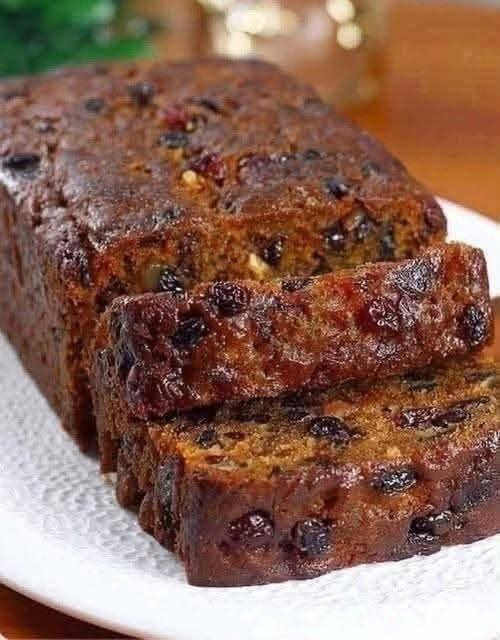
Moist Old-Fashioned Fruitcake: The Rich Raisin & Walnut Loaf That Converts Fruitcake Skeptics
Fruitcake has a reputation problem — and this recipe fixes it. This moist old-fashioned fruitcake is rich, tender, and packed with sweet raisins, dried cranberries, chopped dates, and crunchy walnuts. It’s everything a classic holiday fruitcake should be: deeply spiced, generously fruited, and never dry. Perfect for Christmas morning, holiday gifting, or a quiet slice with a warm cup of coffee on a cold afternoon.
If you’ve only ever had mass-produced fruitcake — the dense, sticky brick that gets regifted every December — this loaf will change your mind. It’s a homemade fruitcake made the old-fashioned way, with real butter, brown sugar, warm spices, and a soak of orange juice that keeps every crumb tender. Below you’ll find the full recipe, the soaking technique that makes all the difference, storage and freezing instructions, and the variations that turn one loaf into a whole holiday baking tradition.
Why This Old-Fashioned Fruitcake Is Different
Most fruitcake fails for one of two reasons: it’s too dry, or it’s too heavy. This recipe solves both problems before the batter even hits the pan.
The first fix is the fruit soak. Raisins, dried cranberries, and chopped dates sit in orange juice for 30 minutes before baking, which plumps the fruit and infuses it with bright citrus flavor. That soaked fruit then goes into the batter along with the remaining juice, adding moisture from the inside out.
The second fix is the fat and sugar ratio. Softened butter and brown sugar are creamed until light and creamy, which incorporates air and gives the loaf a tender, cake-like crumb rather than a dense, bready texture. Molasses — optional but highly recommended — adds depth and a subtle caramel note that pairs beautifully with cinnamon and nutmeg.
The third fix is temperature. Baking at 325°F (165°C) is lower and slower than a standard quick bread, which allows the center to set gently while the outside browns evenly. That’s the difference between a fruitcake that’s moist to the last slice and one that dries out at the edges.
The result is a loaf that slices cleanly, keeps beautifully, and improves with a day of rest. It’s the kind of holiday baking recipe that earns a permanent spot in your December rotation — and a strong contender for homemade food gifts.
Ingredients
- 2 cups all-purpose flour
- 1 cup brown sugar
- ½ cup unsalted butter, softened
- 3 large eggs
- 1 cup raisins
- ½ cup dried cranberries
- ½ cup chopped dates
- ½ cup chopped walnuts or pecans
- ½ cup orange juice
- ½ cup milk
- 1 teaspoon vanilla extract
- 1 teaspoon ground cinnamon
- ½ teaspoon ground nutmeg
- 1 teaspoon baking powder
- ½ teaspoon baking soda
- ¼ teaspoon salt
- 2 tablespoons molasses (optional)
A note on ingredients: Because this loaf relies on pantry staples, quality shows. Fresh dried fruit makes a noticeable difference — dried cranberries that are still soft rather than leathery, and dates that aren’t hardened at the edges. If you’re baking for the holidays and sourcing organic dried fruit or organic flour, this is a recipe where the upgrade is worth it. The walnuts can be toasted for five minutes before folding in, which deepens their flavor and keeps them crisp against the soft crumb.
Instructions
1. Soak the fruit
Combine raisins, cranberries, and chopped dates in a bowl. Pour orange juice over the fruit and let soak for 30 minutes. Don’t skip this step — it’s the single biggest factor in how moist the finished loaf will be. Set a timer and use the wait to prep your pan and preheat the oven.
2. Preheat the oven
Set your oven to 325°F (165°C). Grease a 9×5-inch loaf pan and line it with parchment paper. The parchment overhang makes it easy to lift the loaf out cleanly, which matters for a cake this tender.
3. Cream butter and sugar
In a large mixing bowl, beat softened butter and brown sugar until light and creamy. Give this a full three to four minutes — the aeration here is what gives the loaf its soft, cake-like crumb.
4. Add eggs
Beat in the eggs one at a time, mixing well after each addition. Adding them gradually prevents the batter from curdling.
5. Add flavorings
Stir in vanilla extract and molasses, if using. The molasses deepens the color and adds a warm, old-fashioned flavor that suits the spices beautifully.
6. Mix dry ingredients
In a separate bowl, whisk together flour, baking powder, baking soda, cinnamon, nutmeg, and salt. Whisking — rather than just stirring — distributes the leaveners and spices evenly so you don’t get pockets of baking soda or clumps of cinnamon.
7. Combine
Gradually add the dry ingredients to the butter mixture, alternating with milk. Mix gently until combined. Stop as soon as the flour disappears — overmixing develops gluten and produces a tougher loaf.
8. Add dried fruit
Fold in the soaked fruit along with any remaining orange juice and the chopped walnuts. Use a spatula and a light hand. You want the fruit distributed evenly without crushing the air out of the batter.
9. Fill the pan
Pour the batter into the prepared loaf pan and smooth the top. The batter will be thick — that’s expected. A quick tap of the pan on the counter settles it evenly.
10. Bake
Bake for 65–80 minutes, or until a toothpick inserted into the center comes out clean or with a few moist crumbs. Cover loosely with foil if the top browns too quickly. Every oven runs differently, so start checking at the 65-minute mark. If you own an instant read thermometer, the center should register around 200°F (93°C).
11. Cool
Allow the fruitcake to cool in the pan for 15 minutes, then transfer to a wire rack. Cooling in the pan too long traps steam and softens the crust; cooling on a rack lets air circulate underneath.
12. Serve
Once completely cooled, slice into thick pieces and enjoy. For the best flavor, let the fruitcake rest overnight before slicing — the spices settle, the fruit redistributes its moisture, and the crumb firms up just enough to slice cleanly.
Tips for the Best Fruitcake
- Soak the fruit fully. Thirty minutes minimum — overnight in the refrigerator is even better.
- Chop the dates small. Large pieces sink to the bottom and make slicing awkward.
- Toss the fruit and nuts in a tablespoon of flour before folding them in. This keeps them suspended evenly through the loaf instead of sinking.
- Don’t overmix. Stop the moment the flour is incorporated.
- Tent with foil early if your oven runs hot. A fruitcake that browns too fast will be raw in the center.
- Rest overnight before slicing. This is the easiest upgrade in the entire recipe.
- Use an oven thermometer. A 25-degree swing in either direction affects a 70-minute bake significantly — this is one of the most valuable baking tools you can own.
Variations
Christmas Fruitcake: Add candied cherries, orange peel, and mixed dried fruits for a festive flavor. This is the version to bake in November for holiday gifting — it improves with age.
Nut-Free Fruitcake: Omit walnuts and replace them with additional raisins or dried cranberries. Ideal for school functions and allergy-friendly holiday tables.
Spiced Fruitcake: Add ½ teaspoon ground ginger and a pinch of cloves for a warmer, more complex spice profile.
Extra Moist Fruitcake: Brush the warm cake with 2–3 tablespoons of orange juice for additional moisture. This simple glaze is what turns a good fruitcake into a great one, and it’s the traditional technique behind the richest holiday loaves.
If you bake for specific dietary needs, this recipe adapts thoughtfully. For a gluten free fruitcake, use a tested gluten-free flour blend with a binder and add an extra tablespoon of milk — gluten-free batters need more moisture. For a dairy free version, substitute a plant-based butter and oat or almond milk. This loaf is naturally rich and satisfying, which makes it a welcome addition to any holiday meal plan, whether or not anyone at the table is following a specific diet.
How to Serve and Gift This Fruitcake
This loaf shines on a holiday breakfast table, sliced thick and served alongside coffee or tea. It’s equally at home on a dessert platter with a wedge of sharp cheddar, which is the classic pairing in much of Europe. Toasted under the broiler for a minute and spread with salted butter, it becomes something close to perfect.
For homemade food gifts, bake the loaf, cool it completely, then wrap it in parchment and tie it with twine. A small tag listing the ingredients is a thoughtful touch for anyone with allergies. Individual slices wrapped in wax paper make lovely additions to cookie tins and neighbor gifts.
If you’re building a holiday baking plan, this fruitcake is a strategic recipe: it’s make-ahead friendly, it improves with rest, and it freezes beautifully. Bake two loaves on a Sunday, gift one, freeze the other in slices, and you’ve handled holiday breakfast, dessert, and gifting in a single session. Add it to your weekly meal planner in December and it quietly solves the “what do I bring” problem for every party on the calendar.
Storage
Room Temperature: Store tightly wrapped in an airtight container for up to 3 days.
Refrigerator: Keep refrigerated for up to 1 week. Wrap well — the loaf absorbs fridge odors easily.
Freezer: Wrap individual slices tightly and freeze for up to 3 months. Slicing before freezing means you can thaw exactly what you need.
Serving Tip: For the best flavor, let the fruitcake rest overnight before slicing.
Prep Time: 20 minutes, plus soaking
Cook Time: 65–80 minutes
Servings: 10–12 slices
Frequently Asked Questions
Why is my fruitcake dry?
Usually one of three reasons: the fruit wasn’t soaked long enough, the loaf was overbaked, or it was sliced before cooling. Soak the fruit for a full 30 minutes, start checking at 65 minutes, and cool completely before slicing.
Can I make this fruitcake ahead of time?
Yes — and you should. This is one of the rare baked goods that genuinely improves with age. Bake it a day or two before serving, or a week ahead for the holidays, wrapped tightly and stored in a cool spot.
Can I use different dried fruit?
Absolutely. Dried apricots, figs, golden raisins, currants, and candied citrus peel all work. Keep the total volume roughly the same so the batter-to-fruit ratio stays balanced.
Can I bake this in a different pan?
Yes. Two smaller 8×4-inch pans will work, though you’ll need to reduce the baking time by roughly 15–20 minutes. Mini loaf pans make excellent food gifts and bake in about 35–45 minutes. Start checking early and rely on the toothpick test.
Does fruitcake need alcohol?
No. Traditional fruitcakes are often brushed with brandy or rum, but this recipe uses orange juice for moisture and flavor. If you’d like to add a spirit, brush a tablespoon or two over the warm loaf — but it’s entirely optional.
Can I make this gluten free or nut free?
Yes to both. For gluten free, use a tested gluten-free flour blend with a binder and add a little extra milk. For nut free, simply swap the walnuts for extra raisins or cranberries.
How do I know when it’s fully baked?
A toothpick inserted in the center should come out clean or with a few moist crumbs. For certainty, the internal temperature should read around 200°F (93°C) on an instant read thermometer.
The Bottom Line
This moist old-fashioned fruitcake is the recipe that redeems a much-maligned holiday classic. Real butter, brown sugar, a soak of orange juice, and a generous handful of walnuts produce a loaf that’s tender, deeply spiced, and packed with fruit in every slice. It’s simple enough for a weekend bake, elegant enough for a holiday table, and sturdy enough to wrap up as a homemade gift.
Bake one loaf this week, let it rest overnight, and slice it with your morning coffee. Then bake two more for December — one to keep and one to give away. This is the holiday fruitcake that gets requested, not regifted.